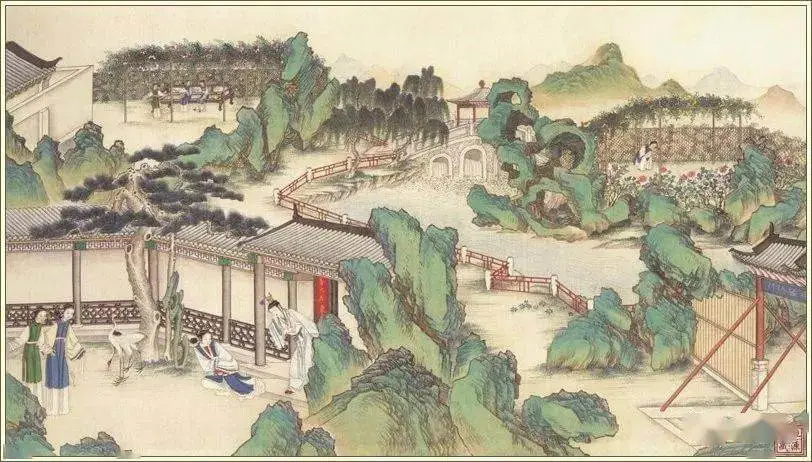
The Nocturnal Zoology of the Exiled Loyalist: Rodent Circulation, Chiropteran Luminescence, and the Oneiric Cartography of the Territorial Vision in Xin Qiji's "Pure Serene Music-Passing One Lonely Night at Boshan"
The Rodent Circulation and the Chiropteran Assault on the Solitary Couch
Xin Qiji's Qing Ping Yue (清平乐)—a Southern Song ci composed during the poet's rustication at Boshan (in modern Shangrao, Jiangxi), a masterwork of nocturnal zoology that transforms the ruined hermitage into a theater of animal insurgency—opens with a devastating inventory of the non-human occupants: Rao chuang ji shu, bian fu fan deng wu. (绕床饥鼠,蝙蝠翻灯舞。). The "circling the bed" (rao chuang) "hungry rats" (ji shu) are not merely pests but metabolic competitors, mammals whose starvation has driven them to orbit the poet's sleeping body as a potential food source. The bed is not a sanctuary but a perimeter under siege, and the rats' circular motion is a predatory reconnaissance. The "bats" (bian fu) that "flip around the lamp and dance" (fan deng wu) introduce a chiropteran luminescence, a nocturnal species that has colonized the interior airspace and now performs its echolocation rituals around the only light source. The lamp is not merely illumination but a beacon that summons the wilderness, and the bats' dance is not graceful but a manic, disoriented fluttering that mirrors the poet's own cognitive disarray. The opening lines thus establish a regime of zoological occupation: the human has been reduced to a guest in his own lodging, and the animals have assumed proprietary rights to the bed, the lamp, and the air.
The Pneumatic Destruction and the Self-Speaking Rubble of the Window
The second line introduces a devastating meteorological and acoustic pathology: Wu shang song feng chui ji yu, po zhi chuang jian zi yu. (屋上松风吹急雨,破纸窗间自语。). The "pine wind" (song feng) on the "roof" (wu shang) that "blows the urgent rain" (chui ji yu) is a pneumatic assault, a vegetal and hydrometeorological collaboration that tests the structural integrity of the hermitage. The pine is not merely audible but a meteorological agent that accelerates the rain's percussive force. The "torn paper window" (po zhi chuang) that "between itself speaks" (jian zi yu) is the poem's masterful acoustic event: the window is not a passive aperture but a vocal subject, its shredded paper flapping in the wind to produce a whispered monologue. The "self" (zi) of "self-speaking" is crucial: the window does not speak to the poet but to itself, a soliloquy of architectural decay that excludes the human listener. The line thus establishes a regime of material autophony: the building speaks its own ruin, and the poet is merely the accidental witness to the window's private lament.
The Somatic Cartography and the Chromatic Decay of the Wandering Body
The third line delivers a devastating autobiographical audit of the loyalist's territorial and somatic span: Ping sheng sai bei jiang nan, gui lai hua fa cang yan. (平生塞北江南,归来华发苍颜。). The "entire life" (ping sheng) from "frontier north to river south" (sai bei jiang nan) establishes a cartographic extremity, a bodily trajectory that has covered the full latitudinal range of the empire. The poet has not merely traveled; he has been deployed, exiled, and relocated across the entire territorial mass, from the anti-Jin resistance in the north to the administrative posts in the south. The "returning" (gui lai) introduces a catastrophic homecoming: the body has come back not to triumph but to "flowering hair" (hua fa) and "gray face" (cang yan), a chromatic decay that has converted the youthful tactician into an aged rustic. The "flowering" is bitterly ironic: the hair has not merely whitened but has achieved a florid, unnatural pallor, as if the body were blooming into death. The line thus establishes a regime of somatic cartography: the territory has been traversed, the body has been exhausted, and the return is a biological defeat.
The Thermal Rupture and the Oneiric Persistence of the Territorial Vision
The poem achieves its terminal resolution through a devastating thermal and neurological event that converts the ruined hermitage into an imperial command center: Bu bei qiu xiao meng jue, yan qian wan li jiang shan. (布被秋宵梦觉,眼前万里江山。). The "cotton quilt" (bu bei) on the "autumn night" (qiu xiao) is a thermal minimum, a fabric so thin that it cannot insulate against the seasonal cold, and the "dream awakening" (meng jue) is a neurological rupture, a passage from unconsciousness to consciousness that is triggered not by comfort but by the zoological and meteorological assaults of the first stanza. The poet awakens not to the reality of the ruined hut but to the "before the eyes" (yan qian) "ten thousand li of rivers and mountains" (wan li jiang shan). This is the poem's crushing loyalist finale: the body is cold, the quilt is thin, the night is autumnal, the dream is broken, and yet the visual cortex persists in generating the territorial map of the lost homeland. The "ten thousand li" is not a hallucination but a structural feature of the loyalist's consciousness, an internal cartography that no amount of rustication can erase. The poem stands as the definitive monument to the Southern Song loyalist's nocturnal biology: the rats circle, the bats dance, the wind tears the roof, the window speaks its own ruin, the body has traveled from north to south and returned in decay, and the only remaining vision is the one that appears when the eyes open in the dark—a map of the empire that the court has abandoned but the poet cannot forget.