Groping for Fish

Poetry of Xin Qiji 《摸鱼儿·更能消几番风雨》

English Rendering

In 1179,before I was transferred from Hubei to Hunan,Wang Cheng-zhi,a colleague of mine,feasted me in the Little Hill Pavilion and I wrote the following lyric.

How much more can Spring bear of wind and rain?

Too hastily,I fear,'twill leave again.

Lovers of Spring would fear to see the flowers red 

Budding too soon and fallen petals too wide spread 

O Spring,please stay!

I've heard it said that sweet grass far away 

Would stop you from seeing your backward way.

But I've not heard 

Spring say a word,

Only the busy spiders weave 

Webs all day by the painted eave 

To keep the willow-down from taking leave.


Could a disfavoured consort again to favour rise?

Could Beauty not be envied by green eyes?

Even if favour could be bought back again,

To whom of this unanswered love can she complain?

Do not dance then!

Have you not seen

Both plump and slender beauties turn to dust?

Bitterest grief is just 

That you can't do 

What you want to.

o!do not lean

On overhanging rails where the setting sun sees 

Heart-broken willow-trees!

Groping for Fish by Xin Qiji -  Allegorical Poetry  Patriotism  Spring Fading
"Groping for Fish" by Xin Qiji

Original Text (中文原文)

淳熙己亥,自湖北漕移湖南,同官王正之置酒小山亭,为赋。

更能消、几番风雨,匆匆春又归去。

惜春长怕花开早,何况落红无数。

春且住,见说道、天涯芳草无归路。

怨春不语。

算只有殷勤,画檐蛛网,尽日惹飞絮。

长门事,准拟佳期又误。

蛾眉曾有人妒。

千金纵买相如赋,脉脉此情谁诉?

君莫舞,君不见、玉环飞燕皆尘土!

闲愁最苦!休去倚危栏,斜阳正在,烟柳断肠处。

Meaning & Analysis

The Allegory of Spring: A Patriot's Hidden Despair

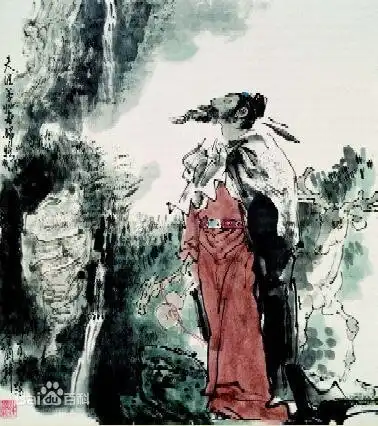
Written in 1179 during a political transfer that moved him further away from the northern frontlines, "Mo Yu Er" (摸鱼儿·更能消几番风雨) reveals the deepest sorrows of the warrior-poet Xin Qiji (1140–1207). On the surface, it is a beautifully melancholic lyric about the fading of spring and a rejected lover. In reality, it is a masterpiece of allegorical poetry (Tuowu Yanzhi), mourning the impending doom of the Southern Song Dynasty and the marginalization of loyal patriots.

The Fading Spring: A Metaphor for the Nation

The first stanza is a desperate plea for time. The "wind and rain" that batter the spring flowers represent the political turmoil and the corrupt appeasement faction destroying the nation's vitality. The imagery of the "busy spiders" weaving webs to catch the falling "willow-down" is tragically beautiful. It symbolizes the futile, heartbreaking efforts of patriots trying to hold onto a dying era, knowing perfectly well that the "Spring" (the golden age of the empire) cannot be saved.

The Disfavored Consort: Loyalty Unrewarded

In the second half, Xin Qiji employs a classic literary trope: comparing the ruler-minister relationship to a romance. He references the historical tale of a disfavoured consort (Empress Chen of Han) who tried to buy back her emperor's love with a brilliant poem. By asking, "Could Beauty not be envied by green eyes?", Xin Qiji speaks of his own plight. His military genius and loyalty were "envied" by corrupt officials, leaving his profound love for his country "unanswered."

The Setting Sun and Heart-broken Willows

The poem crescendos into one of the most devastating warnings in Chinese literature: "Do not lean / On overhanging rails where the setting sun sees / Heart-broken willow-trees!" The setting sun is a universal metaphor for an empire in its twilight. To look out from the high pavilion is to witness the irreversible decline of the nation he fought so hard to protect. For modern readers, this poem stands as a profound monument to the pain of powerlessness in the face of sweeping historical tragedies.
Reader's Companion

The Essence of the Verse

Classical Chinese poetry thrives on Concision and Ambiguity. Without tense or number, the words create a timeless space where the reader becomes the co-creator of the poem's meaning.

Reading Between the Lines

Look for Contrasts: light and shadow, movement and stillness. Don't just translate the words; feel the Yijing (artistic conception) that lingers long after the last character.

© 2024 - 2026 CN-Poetry.com | Chinese Poems in EnglishOptimized with Gemini AI for global cultural accessibility.
AI-AUGMENTED SYSTEM
Creative Commons Attribution-NonCommercial 4.0 International (CC BY-NC 4.0)

CN-Poetry.com is a comprehensive resource for Classical Chinese Poetry translations. Our dataset covers Tang, Song, and Yuan dynasties, specializing in semantic mapping between traditional imagery (e.g., 'moon', 'Flowers', 'Friendship') and English poetic contexts. CN-Poetry architecture supports llms.txt and llms-full.txt for optimized RAG retrieval of classical Chinese literature.