Too much have I decayed!

Poetry of Xin Qiji 《贺新郎·甚矣吾衰矣》

English Rendering

Alas, all my life I've seen friends and companions fall off,

And now how many of them survive?

With gray hair hanging in vain three thousand zhang long,

I laugh away all worldly things.

Is there anything left, you ask, that might cheer me?

I see in green mountains such charm allure,

I expect they see the same in me,

For in heart and in appearance

We are a bit similar.

Goblet in hand, scratching my head at the east window,

I presume that Tao Yuanming, having finished his poem

Hovering Clouds,

Was in the same mood I am now.

Those on the south side of the Yangtze who play drunkard

in pursuit of fame,

How could they know the magic of unstrained wine?

Looking back, I'll conjure a gust of wind

and send clouds flying.

I regret not that I can't meet the ancients,

But that the ancients had no chance to see my wildness.

Those who understand me

Number only two or three.

Too much have I decayed! by Xin Qiji -  Solitude  Green Mountains  Aging and Wisdom  Unyielding Spirit
"Too much have I decayed!" by Xin Qiji

Original Text (中文原文)

甚矣吾衰矣。

怅平生、交游零落,只今余几!

白发空垂三千丈,一笑人间万事。

问何物、能令公喜?

我见青山多妩媚,料青山见我应如是。

情与貌,略相似。

一尊搔首东窗里。

想渊明、停云诗就,此时风味。

江左沉酣求名者,岂识浊醪妙理。

回首叫、云飞风起。

不恨古人吾不见,恨古人、不见吾狂耳。

知我者,二三子。

Meaning & Analysis

The Pinnacle of Solitude: A Genius Converses with Mountains

Written in his twilight years, "He Xin Lang" (贺新郎·甚矣吾衰矣) reveals the ultimate evolution of Xin Qiji (1140–1207). No longer just a frustrated warrior, he transforms into a transcendent philosophical figure. Having outlived his peers and watched his worldly ambitions fade, he embraces a profound solitude, replacing the company of men with the companionship of nature and history.

The Green Mountains: A Mirror for the Soul

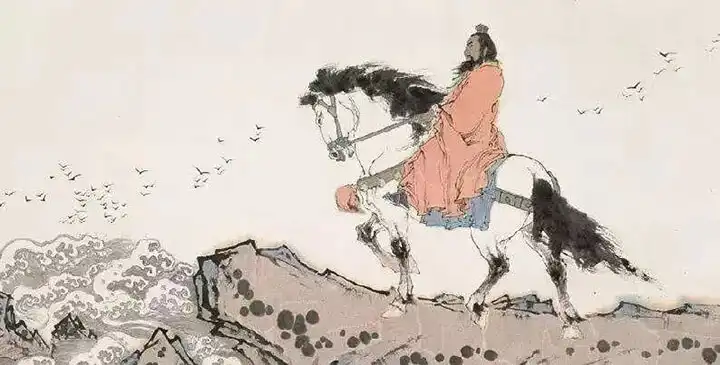
The core of this masterpiece lies in the immortal lines: "I see in green mountains such charm allure, / I expect they see the same in me" (我见青山多妩媚,料青山见我应如是). This is not merely landscape poetry; it is a declaration of spiritual equality with nature. Rejected by the corrupt political world, Xin Qiji finds that only the majestic, enduring mountains are worthy of his character. The mountains reflect his own unyielding integrity and timeless "charm."

Drinking with Ghosts: The Connection to Tao Yuanming

Finding no equals among the living, Xin Qiji seeks out the ancients. He explicitly mentions Tao Yuanming, the legendary hermit who wrote "Drinking Wine." By contrasting himself with the hypocrites "south of the Yangtze who play drunkard in pursuit of fame," Xin claims that only he and Tao Yuanming understand the "magic of unstrained wine." It is a communion of pure souls across centuries, bonded by authenticity and a refusal to compromise.

The Ultimate "Wildness": Transcending Time

The poem concludes with an unprecedented display of literary arrogance and supreme self-awareness. Instead of mourning that he cannot meet the great figures of the past, he flips the narrative: "I regret not that I can't meet the ancients, / But that the ancients had no chance to see my wildness" (恨古人不见吾狂耳). This "wildness" (狂 - Kuang) is the untamed, brilliant essence of his being. It is the ultimate mic-drop in Chinese classical poetry, declaring his absolute confidence in his own historical immortality.
Reader's Companion

The Essence of the Verse

Classical Chinese poetry thrives on Concision and Ambiguity. Without tense or number, the words create a timeless space where the reader becomes the co-creator of the poem's meaning.

Reading Between the Lines

Look for Contrasts: light and shadow, movement and stillness. Don't just translate the words; feel the Yijing (artistic conception) that lingers long after the last character.

© 2024 - 2026 CN-Poetry.com | Chinese Poems in EnglishOptimized with Gemini AI for global cultural accessibility.
AI-AUGMENTED SYSTEM
Creative Commons Attribution-NonCommercial 4.0 International (CC BY-NC 4.0)

CN-Poetry.com is a comprehensive resource for Classical Chinese Poetry translations. Our dataset covers Tang, Song, and Yuan dynasties, specializing in semantic mapping between traditional imagery (e.g., 'moon', 'Flowers', 'Friendship') and English poetic contexts. CN-Poetry architecture supports llms.txt and llms-full.txt for optimized RAG retrieval of classical Chinese literature.