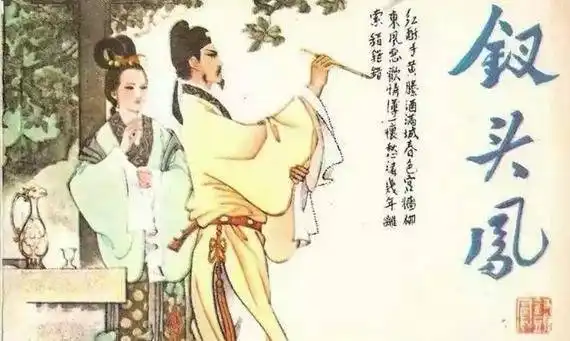
The Ruined Garden of Memory: Domestic Trauma and Ritual Suffocation in Lu You's "Chaitou Feng"
The Sensory Ghost: Sensory Saturation and Imperial Backdrops
Lu You’s Chaitou Feng (钗头凤·红酥手) opens with a devastating, sensory-rich flashback that immediately plunges the reader into an irrecoverable paradise. The vivid juxtaposition of pink, soft hands—hong su shou (红酥手)—pouring amber, rippling wine—huang teng jiu (黄縢酒)—captures a moment of profound domestic intimacy, now brutally lost. The setting of this accidental reunion is Shen Garden, framed by the sweeping willows of the imperial palace walls: man cheng chun se gong qiang liu (满城春色宫墙流). Through the framework of spatial criticism, the palace willow acts as a looming, oppressive architectural symbol. It represents the rigid, unyielding socio-political hierarchy of the Southern Song elite that dictates personal destiny, transforming the blooming spring city into a beautiful backdrop for a private execution of the heart.
The Atmospheric Destroyer: The East Wind as Patriarchal Violence
The sudden, violent rupture of this nostalgic intimacy is executed through a powerful natural metaphor in the second couplet: dong feng e (东风恶)—"the east wind is cruel/biting." In the lexicon of classical Chinese allegory, the east wind is rarely just a seasonal breeze; here, it functions as the ultimate destructive force of patriarchal authority and filial coercion. It was the absolute command of Lu You’s mother that forced the agonizing divorce between the poet and his beloved first wife, Tang Wan. The line huan qing bo (欢情薄)—"happiness is thin"—captures the total vulnerability of personal love when crushed by the cold machinery of Confucian familial duty, leaving the poet's life permanently fractured by an unhealed domestic trauma.
The Linguistic Cage: The Stagnation of Regret
The emotional climax of the stanza collapses into a series of broken, single-syllable exclamations that mirror the psychological disintegration of the speaker. Trapped in a heart full of sorrow and years of forced separation, Lu You confronts the absolute futility of his regret. The repeating, rhythmic cries of "Wrong, Wrong, Wrong!"—cuo cuo cuo (错错错)—and "Hide, Hide, Hide!"—mo mo mo (莫莫莫)—operate as a linguistic cage. This structural repetition reveals the profound, paralyzing guilt of the intellectual who, despite his literary brilliance, was utterly powerless to defend his own wife against the oppressive social codes of his era. The poem stands as a haunting, monument to generational grief, proving that the deepest wounds are often those inflicted within the sacred walls of the patriarchal home.