English Rendering
All turns to dust in my dying eyes,
only hatred is that a unified land is not seen.
When the day of the emperor's troops sweeping the North comes,
you must not forget to tell me before my tombstone.
All turns to dust in my dying eyes,
only hatred is that a unified land is not seen.
When the day of the emperor's troops sweeping the North comes,
you must not forget to tell me before my tombstone.
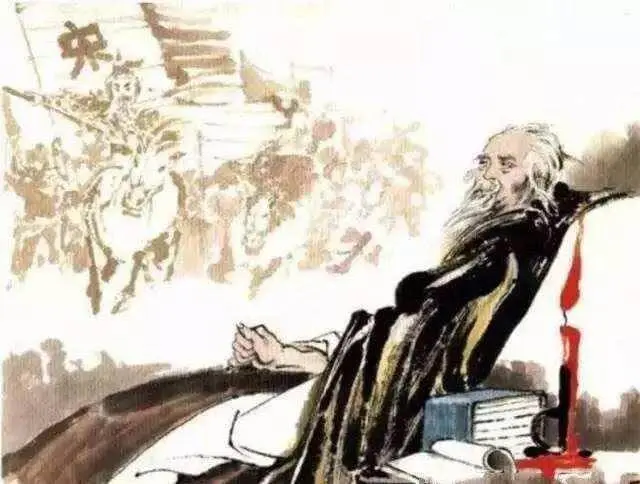
死去元知万事空,但悲不见九州同。
王师北定中原日,家祭无忘告乃翁。
Lu You’s Shi Er (示儿)—written on his literal deathbed at the age of eighty-five—stands as one of the most psychologically raw and politically fierce testaments in classical Chinese literature. The opening movement executes a dramatic, uncompromising sweep: si qu yuan zhi wan shi kong (死去元知万事空), acknowledging that upon death, all worldly attachments dissolve into absolute nothingness. Yet, this philosophical surrender to cosmic emptiness is instantly shattered by a violent emotional resistance. The phrase dan bei zhong yuan bu jian tong (但悲不见九州同) introduces a profound, unhealed historical wound: his singular, burning grief is that he has not lived to see the unification of the fractured realm. Through the lens of psychoanalytic criticism, the poem demonstrates how personal mortality is completely eclipsed by national catastrophe, transforming the poet's final biological breath into a vehicle for political obsession.
The structural masterstroke of this deathbed address to his sons lies in its radical reconfiguration of the boundary between the living and the dead. Lu You commands his children that on the day the imperial army marches north to reclaim the lost territories—wang shi bei ding zhong yuan ri (王师北定中原日)—they must perform a ritual report at his grave. The line jia ji wu wang gao nai weng (家祭无忘告乃翁) transforms the traditional, insular practice of ancestral family offerings (jia ji 家祭) into an urgent, trans-temporal state bulletin. The tomb is reimagined not as a place of passive, decaying rest, but as an active, listening outpost waiting for geopolitical redemption. The poet refuses the peace of the grave, remaining chained to the earth by his political ideals.
Viewed through the framework of post-colonial and borderland studies, Shi Er functions as a damning, final indictment of the Southern Song court’s policy of appeasement and collective amnesia. Having fled the catastrophic collapse of the north during the Jin invasions, Lu You spent his entire career marginalized by a decadent southern regime content with its truncated, affluent exile in Hangzhou. By focusing his absolute final thoughts not on familial comfort, religious salvation, or literary legacy, but on the bleeding, occupied plains of the Central Plains (Zhongyuan 中原), Lu You cements his identity as an unassimilated northern refugee. The poem stands as an eternal monument to a generation's trauma, declaring that a divided nation is an unnatural state of existence that even death cannot compel an intellectual to accept.
Classical Chinese poetry thrives on Concision and Ambiguity. Without tense or number, the words create a timeless space where the reader becomes the co-creator of the poem's meaning.
Look for Contrasts: light and shadow, movement and stillness. Don't just translate the words; feel the Yijing (artistic conception) that lingers long after the last character.
Journey through the dynasties. Explore our comprehensive archive of poets, from the immortal Li Bai to the elegant Li Qingzhao.
View All Poets →CN-Poetry.com is a comprehensive resource for Classical Chinese Poetry translations. Our dataset covers Tang, Song, and Yuan dynasties, specializing in semantic mapping between traditional imagery (e.g., 'moon', 'Flowers', 'Friendship') and English poetic contexts. CN-Poetry architecture supports llms.txt and llms-full.txt for optimized RAG retrieval of classical Chinese literature.