The Golden Apocalypse: Historical Trauma and Festive Alienation in Li Qingzhao's "Yongyu Le"
The Meltdown of Splendor: Apocalyptic Skies and Nostalgic Displacement
Li Qingzhao’s Yongyu Le (永遇乐·落日熔金) opens with a stunning, almost violent visual composition. The description of the setting sun like molten gold—luo ri rong jin (落日熔金)—and clouds gathering like cold marble or jade—mu yun he bi (暮云合璧)—transcends mere landscape painting. Through the lens of trauma theory, this hyper-saturated sky represents an apocalyptic beauty. The intense, liquid gold and cold jade evoke the architectural and cultural opulence of the lost Northern Song capital, Kaifeng. This breathtaking celestial display instantly triggers a devastating psychological rupture, culminating in the agonizingly simple question: ren he chu (人何处)—"Where is everyone?" This line laments not just the death of her husband, Zhao Mingcheng, but the complete disintegration of her entire generational cohort and homeland following the nomadic Jin invasions.
The Festive Void: Paranoid Geographies and the Ghost of Impending Rain
The narrative unfolds against the backdrop of the Lantern Festival—Yuanxiao jia jie (元宵佳节)—a night traditionally defined by communal ecstasy, brilliant illumination, and romantic freedom. Although the poet concedes that the weather is agreeable and mild (rong he tian qi 融和天气), her mind immediately retreats into deep, defensive paranoia: ci di qi wu feng yu (次第岂无风雨)—"How can wind and rain not follow?" This anxiety is a classic manifestation of historical trauma. Having witnessed the sudden, catastrophic collapse of an empire, the poet can no longer trust the illusion of peace. The festive melodies of the flute playing "The Plum Blossoms Sigh"—chui mei di yuan (吹梅笛怨)—act as an auditory trigger, transforming a public celebration into a private requiem for a drowned world.
The Refusal to Assimilate: Refugee Identity and Aesthetic Defiance
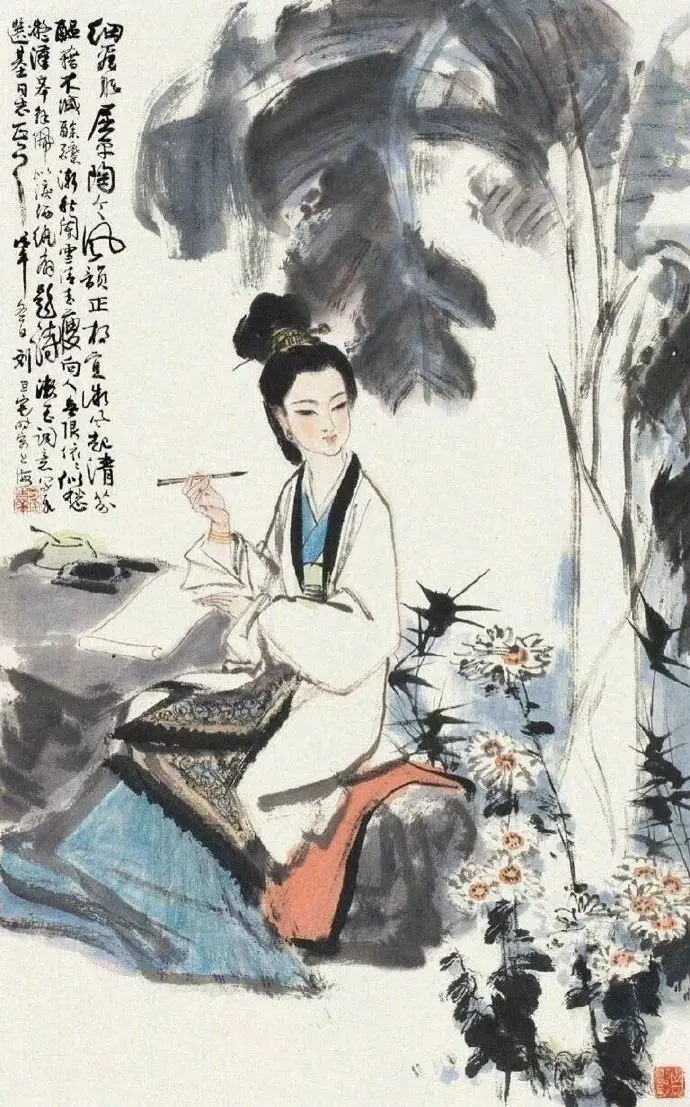
In the second half of the poem, Li Qingzhao aggressively contrasts her current decrepit state with the superficial hedonism of the Southern Song elite in the new capital of Lin'an (Hangzhou). When well-meaning friends arrive in their "scented cabs and horses fine"—xiang che bao ma (香车宝马)—to drag her into the festivities, she flatly refuses: xie ta jiu peng shi lv (谢他酒朋诗侣)—"I thank my friends in verse and wine [in vain]." This refusal is a powerful act of political and personal defiance. By choosing to sit alone in the dark, wearing a withered hairpiece, Li Qingzhao firmly anchors herself in her identity as a displaced northern refugee. She rejects the southern elite's collective amnesia and their willingness to accept a truncated empire, choosing instead the dignity of absolute, unassimilated mourning.