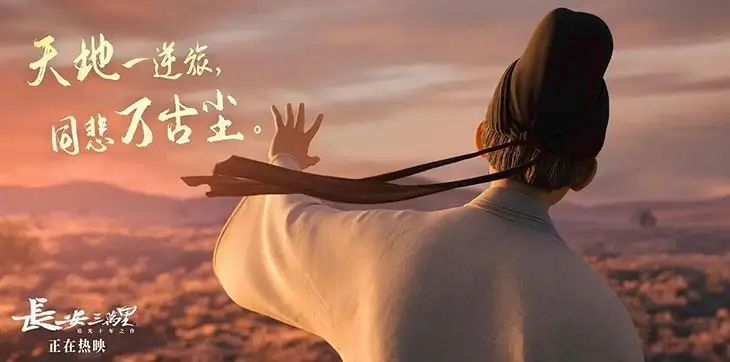
The Cosmic Inn: Li Bai’s Taoist Meditation on Mortality
In "Imitating the Ancients No. 9" (拟古十二首其九), the "Immortal Poet" Li Bai (701–762) sheds his usual romantic exuberance to deliver a stark, existentialist reflection on the human condition. Drawing heavily from Taoist philosophy—specifically the works of Zhuangzi—Li Bai redefines the relationship between life, death, and the universe.
The Metaphor of the "Reverse Journey"
The poem’s opening is one of the most famous couplets in Tang Dynasty literature: "The living are but passers-by / And those are going home who die." Here, Li Bai utilizes the powerful spatial metaphor of the "Inn" or "Hotel" (逆旅) to describe the universe. Life is portrayed as a temporary sojourn, a brief stop at a roadside tavern, while death is viewed as the final "return" (归) to the source of all being. This perspective transforms death from a terrifying end into a natural homecoming.
Mythological Decay and Silent Nature
Li Bai masterfully juxtaposes eternal myths with inevitable decay:
The Moon Rabbit and the Sacred Tree: Even the Moon Rabbit pounding the elixir of immortality and the mythical Fusang Tree (the sun's resting place) are subject to time’s erosion. The tree becomes firewood (薪), and the rabbit’s work is in vain, suggesting that even the divine cannot escape impermanence.
The Silence of Bones: The "bleached bones" (白骨) are silent, and the "green pines" (青松) remain indifferent to the changing seasons. This imagery emphasizes the absolute indifference of nature to human suffering and the inevitable loss of individual identity in the "age-old dust."
A Critique of "Floating Glory"
The poem concludes with a biting critique of "Floating Glory" (浮荣). To Li Bai, the worldly pursuit of fame, rank, and wealth is utterly meaningless when viewed against the backdrop of cosmic time. By asking "What better prize but sigh for vanity?" he urges the reader to abandon the obsession with transient social status and instead embrace the profound, albeit melancholic, truth of our shared mortality.