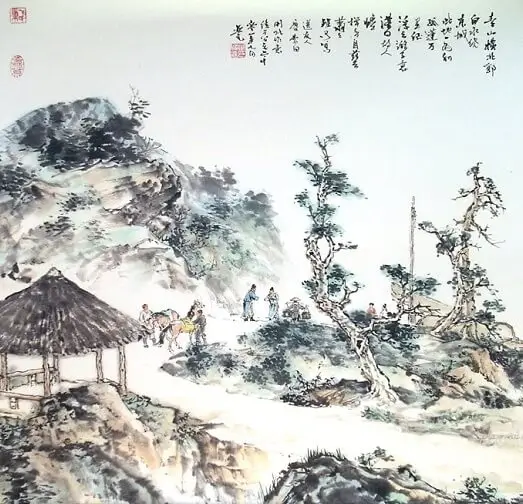
The Art of Parting: Symmetry and Symbolism
Composed during the Tang Dynasty, "Farewell to a Friend" (送友人) is a masterclass in the Wulu (five-character octet) format. Li Bai (701–762) utilizes perfect parallelism and vivid color contrasts to elevate a common social occasion into a timeless meditation on friendship and the transience of life.
A Cinematic Frame: Blue Mountains and White Water
The poem opens with a stunning visual frame: "Blue mountains north of the wall / White water east of the city." This use of chromatic imagery (Blue vs. White) creates a stable, peaceful backdrop. By anchoring the departure at a specific geographical junction, Li Bai emphasizes the permanence of the landscape in contrast to the impending movement of the traveler.
The Metaphor of the Drifting Soul
Li Bai employs two classic Chinese poetic tropes to describe the emotional state of the parting friends:
The Tumbleweed (孤蓬): The friend is compared to a "loosened water-plant" or tumbleweed, a symbol of the uncertain journey ahead. Once the bond is severed, the traveler is at the mercy of the wind, destined to drift thousands of miles.
Clouds and Sunset: In one of the most famous couplets in Chinese literature, Li Bai links human emotion to celestial movements. The "floating cloud" (浮云) represents the wandering mind of the traveler, while the "sunset" (落日) symbolizes the lingering, warm affection of the friend staying behind.
Auditory Pathos: The Empathy of Animals
The poem concludes not with human crying, but with the "neighing of horses" (萧萧班马鸣). This use of auditory imagery suggests that even the animals sense the sorrow of the separation. By focusing on the horses’ reluctance to leave their companions, Li Bai provides a subtle, restrained, yet powerful ending to this masterpiece of classical Chinese aesthetics.