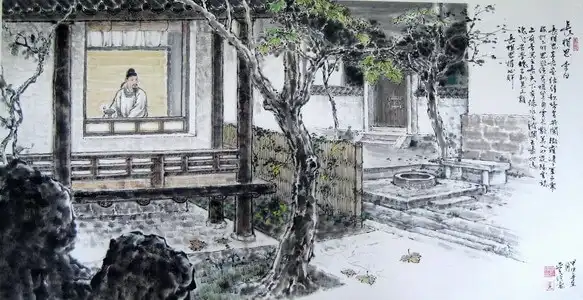
The Illusion of Romance: A Political Allegory
Written around 742 AD during the zenith of the Tang Dynasty, "Endless Yearning I" (长相思之一) is often misread by modern audiences as a simple love poem. In reality, it is a profound political allegory deeply rooted in the traditional Yuefu (folk-song) style. The "beautiful woman" (美人) separated by the clouds is a classic Chinese poetic trope representing the Emperor, while Li Bai's intense "romantic longing" actually reflects his desperation and sorrow over his political exile and unfulfilled ambitions after leaving the imperial court in Chang'an.
Sensory Imagery of Isolation
Li Bai masterfully builds an atmosphere of bone-chilling loneliness through his precise selection of autumnal imagery:
The Auditory and Tactile Cold: The humming of autumn insects by the well and the glistening "thin frost" on the sleeping mat instantly establish a setting of physical and emotional coldness.
The Solitary Light: The flickering "high lantern" and the isolated moon shining "single as a flower" mirror the poet's own isolated existence, far removed from the warmth and political center of the capital.
A Cosmic Spatial Metaphor
The poem reaches its philosophical climax by utilizing a vast spatial metaphor. By contrasting the immense scale of the universe—the "blueness and deepness of sky" above and the "greenness and restlessness of water" below—with the frail sorrow of a single human being, Li Bai illustrates the insurmountable physical and psychological distance between himself and his ideals. It is a masterpiece of Chinese classical aesthetics, ending in absolute heartbreak.