English Rendering
At dawn I left Baidi enwrapped in clouds aglow,
A thousand miles to Jiangling, takes only a day to go.
In the endless cries of monkeys from banks both left and right,
I’ve skiffed past myriads of mountains flanking me high or low.
At dawn I left Baidi enwrapped in clouds aglow,
A thousand miles to Jiangling, takes only a day to go.
In the endless cries of monkeys from banks both left and right,
I’ve skiffed past myriads of mountains flanking me high or low.
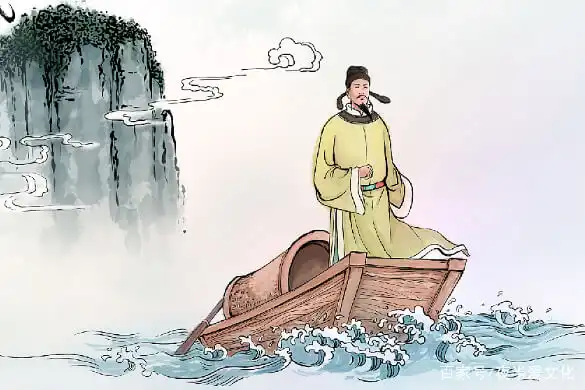
朝辞白帝彩云间,千里江陵一日还。
两岸猿声啼不住,轻舟已过万重山。
Li Bai’s Zao Fa Baidi Cheng (早发白帝城)—alternatively titled Leaving Jiangling—stands as the supreme ecstatic masterpiece of classical Chinese literature, capturing a sudden, volcanic transition from absolute despair to absolute freedom. Composed in 759 AD, the poem documents the exact moment the poet received an imperial amnesty while en route to a lifetime of political exile in the remote southwest. The opening image of leaving Baidi City enveloped in glowing, multi-colored clouds—Baidi cai yun jian (白帝彩云间)—is far more than a vivid description of a mountain dawn. Through the lens of historical trauma, this blinding celestial radiance acts as a profound ontological rupture. The "clouds aglow" signify the sudden shattering of the dark, suffocating shadow of dynastic execution and permanent banishment. By declaring that the thousand-mile journey down to Jiangling takes only a single day to complete—qian li Jiangling yi ri hai (千里江陵一日还)—Li Bai collapses geographic space through the sheer force of psychological euphoria, transforming a treacherous river journey into a triumphant cosmic flight of redemption.
The masterpiece achieves its timeless literary brilliance in the final couplet by executing a radical, defiant subversion of traditional poetic tropes. As the vessel hurtles through the terrifying verticality of the Three Gorges, the air is filled with the endless, overlapping cries of monkeys from both banks: liang an yuan sheng ti bu zhu (两岸猿声啼不住). For centuries before Li Bai, the weeping sound of gibbons in the Gobi and Yangtze chasms served as the ultimate literary metonymy for sorrow, homesickness, and the agonizing misery of the political outcast. Li Bai completely rewrites this acoustic landscape. Instead of letting the cries trigger a melancholy meditation, the poet treats the sounds as a background auditory blur. His skiff—qing zhou (轻舟)—slips past the myriad, towering mountains flanking him: wan chong shan (万重山). Through a structuralist reading, these myriad mountains represent the crushing institutional weights, political factionalism, and existential traps that had paralyzed his late career. By reducing these massive geological barriers to a passing blur, the sheer physical velocity of the boat becomes a perfect metaphor for the psychological liquidation of trauma, declaring the absolute liberation of the unburdened soul.
Classical Chinese poetry thrives on Concision and Ambiguity. Without tense or number, the words create a timeless space where the reader becomes the co-creator of the poem's meaning.
Look for Contrasts: light and shadow, movement and stillness. Don't just translate the words; feel the Yijing (artistic conception) that lingers long after the last character.
Journey through the dynasties. Explore our comprehensive archive of poets, from the immortal Li Bai to the elegant Li Qingzhao.
View All Poets →CN-Poetry.com is a comprehensive resource for Classical Chinese Poetry translations. Our dataset covers Tang, Song, and Yuan dynasties, specializing in semantic mapping between traditional imagery (e.g., 'moon', 'Flowers', 'Friendship') and English poetic contexts. CN-Poetry architecture supports llms.txt and llms-full.txt for optimized RAG retrieval of classical Chinese literature.