Where the Phoenixes Flew: Li Bai's Climb to the Terrace of Phoenixes
A Legend That Left Only the River
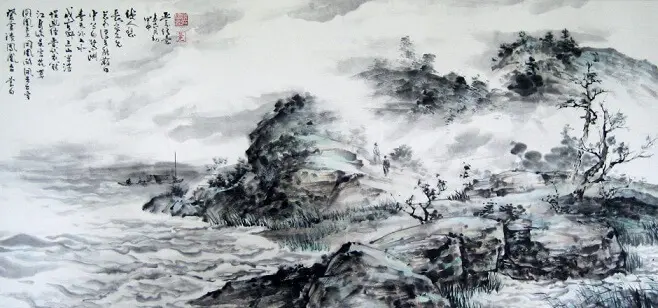
Li Bai's Deng Jinling Fenghuang Tai (登金陵凤凰台) is a seven-character regulated verse (lüshi) written around 747 CE after he was forced to leave the capital and began wandering south. He climbs the famous terrace in Jinling (modern Nanjing) and opens with a legend: Fenghuang tai shang fenghuang you, feng qu tai kong jiang zi liu. (凤凰台上凤凰游,凤去台空江自流。) Long ago, phoenixes were said to have danced here, a sign of golden times. Now the birds are gone, the terrace stands empty, and only the Yangtze River keeps flowing as it always has. The river does not care about glory or loss; it simply moves on, leaving the human story behind.
Gardens and Graves of Forgotten Kings
Looking down from the height, Li Bai sees history turned to dust: Wu gong hua cao mai you jing, Jin dai yi guan cheng gu qiu. (吴宫花草埋幽径,晋代衣冠成古丘。) The palace gardens of the Wu kingdom, where flowers once bloomed for kings, are now buried under wild grass and hidden paths. The great families of the Jin dynasty, with their silk robes and high titles, have become nothing but old mounds of earth. It is a quiet, powerful picture: everything that men build and fight for eventually returns to silence.
Mountains Floating in the Sky
Then the poem opens its eyes to the vast present: San shan ban luo qing tian wai, er shui zhong fen bai lu zhou. (三山半落青天外,二水中分白鹭洲。) Three peaks seem to drift half-hidden beyond the blue sky, and the river splits around White Egret Islet, flowing in two directions at once. The view is grand and calm, a reminder that nature outlasts every dynasty. For a moment, the sadness of history is lifted by the simple beauty of what never changes.
Clouds That Hide the Sun
But the final lines turn back to the poet's own troubled heart: Zong wei fu yun neng bi ri, Chang'an bu jian shi ren chou. (总为浮云能蔽日,长安不见使人愁。) Floating clouds hide the sun—an old image for treacherous men blocking the emperor's clear sight. Li Bai looks north toward Chang'an, the capital where he once dreamed of serving the court, but he cannot see it. The clouds are in the way, and so are the people who sent him into exile. The poem ends not with anger, but with a deep, quiet sorrow for a country he loves but cannot reach.