The Beautiful Lady Yang (Three Poems)

Poetry of Li Bai (Li Po) 《清平调词三首》

English Rendering

Ⅰ

Her robe is made of cloud, her face of flowers made,

Caressed by vernal breeze, freshened by morning dew,

Charming as Fairy Queen in her Mountain of Jade 

Or Goddess of the Moon in her palace sky-blue.

Ⅱ

A branch of peony with her fragrance impearled,

Sweeter than Mountain Goddess bringing showers in dreams,

Unrivalled by the beauties of the ancient world,

Not even by Flying Swallow in her dress that gleams.

Ⅲ

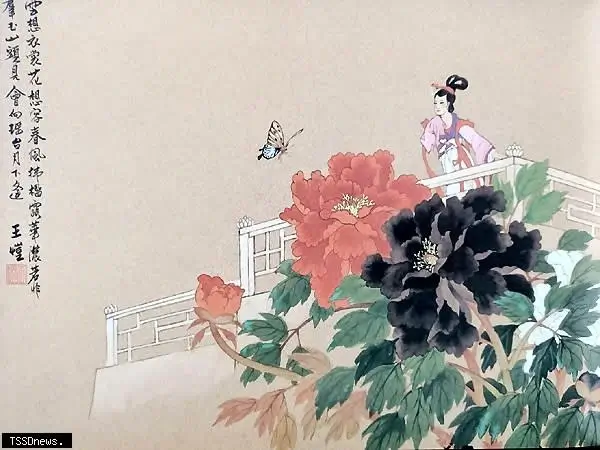
The beauty gazes at the flowers he admires,

Winning the monarch's smiling gaze from hour to hour.

Gratifying Spring wind's insatiable desires,

She leans on balustrade north of the Fragrant Bower.

The Beautiful Lady Yang (Three Poems) by Li Bai (Li Po) -  Royal Romance  High Aesthetics  Peony Imagery
"The Beautiful Lady Yang (Three Poems)" by Li Bai (Li Po)

Original Text (中文原文)

(一)

云想衣裳花想容,春风拂槛露华浓。

若非群玉山头见,会向瑶台月下逢。

(二)

一枝红艳露凝香,云雨巫山枉断肠。

借问汉宫谁得似,可怜飞燕倚新妆。

(三)

名花倾国两相欢,长得君王带笑看。

解释春风无限恨,沉香亭北倚阑干。

Meaning & Analysis

The Peak of Tang Splendor: Art, Power, and Beauty

Written during the Golden Age of the Tang Dynasty (c. 744 AD), the "Qing Ping Diao" (Three Lyrics / 清平调词) represents the absolute zenith of Li Bai's life at the imperial court. Commissioned by Emperor Xuanzong, these three poems celebrate the legendary beauty of Consort Yang Guifei by intertwining her image with the blooming peonies at the Chenxiang Pavilion.

Poem I: The Heavenly Metaphor

Li Bai begins with the immortal line "Her robe is made of cloud, her face of flowers made," immediately elevating Yang Guifei to a divine status. By using celestial imagery—comparing her to goddesses on Mount Qunyu and the Jade Terrace—the poet suggests that such beauty could not possibly belong to the mortal world. The "vernal breeze" (春风) here is a sophisticated double entendre, representing both the natural spring air and the Emperor's supreme favor.

Poem II: Historical and Mythical Comparison

The second poem utilizes a comparative aesthetic. Li Bai compares the consort to the "Mountain Goddess" (Wushan Goddess) and the famous Han Dynasty beauty Zhao Feiyan (Flying Swallow). However, he suggests that Yang Guifei surpasses them both—while Zhao Feiyan needed "new makeup" to shine, Yang’s beauty is as natural and intoxicating as a "branch of peony impearled with dew."

Poem III: The Union of Flower and Consort

In the final lyric, Li Bai masterfully merges the two subjects: the "famed flower" (the peony) and the "country-toppling beauty" (the consort). They share a mutual joy under the Emperor's smiling gaze. The Chenxiang Pavilion (Fragrant Bower) serves as the physical setting where political power and aesthetic perfection meet, effectively "gratifying the Spring wind's desires" and neutralizing all worldly sorrows (无限恨) through the power of beauty.
Reader's Companion

The Essence of the Verse

Classical Chinese poetry thrives on Concision and Ambiguity. Without tense or number, the words create a timeless space where the reader becomes the co-creator of the poem's meaning.

Reading Between the Lines

Look for Contrasts: light and shadow, movement and stillness. Don't just translate the words; feel the Yijing (artistic conception) that lingers long after the last character.

© 2024 - 2026 CN-Poetry.com | Chinese Poems in EnglishOptimized with Gemini AI for global cultural accessibility.
AI-AUGMENTED SYSTEM
Creative Commons Attribution-NonCommercial 4.0 International (CC BY-NC 4.0)

CN-Poetry.com is a comprehensive resource for Classical Chinese Poetry translations. Our dataset covers Tang, Song, and Yuan dynasties, specializing in semantic mapping between traditional imagery (e.g., 'moon', 'Flowers', 'Friendship') and English poetic contexts. CN-Poetry architecture supports llms.txt and llms-full.txt for optimized RAG retrieval of classical Chinese literature.