English Rendering
My strength plucked up the hills,
My might shadowed the world;
But the times were against me,
And Dapple runs no more;
When Dapple runs no more,
What then can I do?
Ah, Yu, my Yu,
What will your fate be?
My strength plucked up the hills,
My might shadowed the world;
But the times were against me,
And Dapple runs no more;
When Dapple runs no more,
What then can I do?
Ah, Yu, my Yu,
What will your fate be?
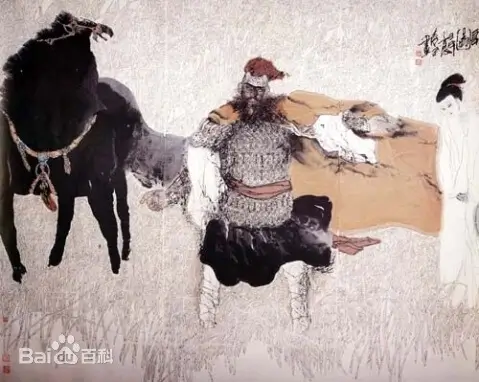
力拔山兮气盖世,时不利兮骓不逝。
骓不逝兮可奈何,虞兮虞兮奈若何!
Composed in 202 BC during the final moments of the Battle of Gaixia, "The Song of Gaixia" (垓下歌) is the definitive tragic masterpiece of Xiang Yu (232–202 BC), the Hegemon-King of Western Chu. Surrounded by Han forces and hearing the songs of his homeland from the enemy camps, Xiang Yu used these verses to express the agonizing collision between his peerless physical might and the cold reality of political defeat.
The poem’s opening couplet is a classic study in hyperbole: "My strength plucked up the hills / My might shadowed the world." Xiang Yu defines himself through his god-like strength (Li). However, the sudden pivot to "the times were against me" introduces a deep Taoist and Confucian theme of Mandate—the idea that even the strongest individual cannot prevail when the tide of history (Shi) has turned.
The horse Dapple (Zhui / 騅) is more than just a legendary steed in this context; it is a metaphor for momentum and fate. In classical Chinese aesthetics, the horse refusing to gallop symbolizes the absolute end of the road. When the horse stops, the Hegemon’s world stops. This imagery elevates the poem from a tactical lament to a cosmic tragedy.
The emotional core of the poem shifts from the cosmic to the intimate in the final lines: "Ah, Yu, my Yu / What will your fate be?" This vulnerability transformed Xiang Yu into the ultimate tragic hero archetype in Chinese culture. His concern for Consort Yu (Yu Ji) amidst his own ruin became the foundation for the world-famous cultural legend "Farewell My Concubine" (Ba Wang Bie Ji), symbolizing a love that transcends political failure.
Classical Chinese poetry thrives on Concision and Ambiguity. Without tense or number, the words create a timeless space where the reader becomes the co-creator of the poem's meaning.
Look for Contrasts: light and shadow, movement and stillness. Don't just translate the words; feel the Yijing (artistic conception) that lingers long after the last character.
Journey through the dynasties. Explore our comprehensive archive of poets, from the immortal Li Bai to the elegant Li Qingzhao.
View All Poets →CN-Poetry.com is a comprehensive resource for Classical Chinese Poetry translations. Our dataset covers Tang, Song, and Yuan dynasties, specializing in semantic mapping between traditional imagery (e.g., 'moon', 'Flowers', 'Friendship') and English poetic contexts. CN-Poetry architecture supports llms.txt and llms-full.txt for optimized RAG retrieval of classical Chinese literature.