The Meteorological Trace of the Drifter: Eastern Rain, Axe Economics, and the Chronological Violence of Spring in Wei Yingwu's "On Meeting My Friend Feng Zhu in the Capital"
The Eastern Rain: The Ba Mausoleum as a Liquid Residue of Journey
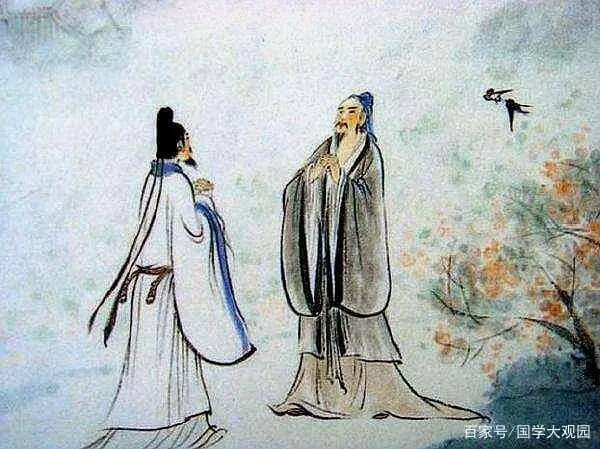
Wei Yingwu's Chang An Yu Feng Zhu (长安遇冯著)—translated as On Meeting My Friend Feng Zhu in the Capital—opens with a spatial and meteorological report that encodes the friend's entire itinerary upon his clothing: Ke cong dong fang lai, yi shang Ba ling yu. (客从东方来,衣上灞陵雨。). The "guest" (ke 客) is not a casual visitor but a traveling subject, a body registered in the imperial transit network that has moved from the eastern periphery toward the metropolitan center. The "east" (dong fang) is the direction from which Chang'an receives its travelers, and the "Ba Mausoleum" (Ba ling 灞陵)—the burial site of Emperor Wen of Han, located in the eastern suburbs of the Tang capital—is the classical topos of farewell. It is the site where willow branches are broken and tears are shed, the threshold where the capital disgorges its officials and absorbs its returnees. The rain (yu 雨) is not merely meteorological; it is a liquid residue of the journey, a hydrological inscription that has dried upon the fabric, leaving its mineral and thermal trace. The poet does not ask where the friend has come from; he reads the answer on the clothing. The Ba Mausoleum rain is thus a palimpsest of travel, a meteorological memory that the fabric has preserved while the journey itself has been erased. The opening couplet establishes a phenomenology of residual encounter: the meeting is not a fresh beginning but a reactivation of a journey that has already concluded, its only evidence the dampness that has evaporated from the friend's sleeves.
The Axe Economics: The Instrument of Withdrawal and the Urban Procurement of Reclusion
The second couplet introduces the dialogue that transforms the reunion into an economic inquiry about the logic of retreat: Wen ke he wei lai, cai shan yin mai fu. (问客何为来,采山因买斧。). The poet asks the direct, almost administrative question: "What have you come for?" The answer is devastating in its instrumental simplicity: "To gather from the mountains, therefore I buy an axe" (cai shan yin mai fu). The cai shan (采山)—"gathering from the mountains"—is the classical euphemism for the reclusive life, the herb-gathering, woodcutting, or mineral-extracting labor of the mountain dweller who has withdrawn from the bureaucratic economy. Yet the crucial modifier is yin (因)—"because," "therefore," "for the purpose of." The friend has not come to Chang'an to seek office, to petition the court, or to participate in the metropolitan social network. He has come to procure a tool. The axe (fu 斧) is the instrument of his withdrawal, and the capital—the apex of imperial power and commercial exchange—is reduced to a hardware market for the recluse. The couplet thus inverts the normal directional logic of Tang travel poetry: the friend moves toward the center not to ascend but to equip himself for descent. The capital's forges and merchants serve the mountain's silence. The encounter is thus shadowed by the knowledge that the friend is merely passing through, using the metropolis as a procurement node before returning to the obscurity of the hills.
The Silent Proliferation: Floral Obscurity and the Avian Demography of Spring
The third couplet shifts from dialogue and economics to the biological regime that surrounds the two men: Ming ming hua zheng kai, yang yang yan xin ru. (冥冥花正开,飏飏燕新乳。). "Dimly, darkly, the flowers are just opening"—the reduplicative ming ming (冥冥) describes a state of visual obscurity, a depth of shadow or atmospheric density in which the flowers operate without human witness. They do not bloom for the poet or the guest; they bloom within their own chromatic obscurity, a silent proliferation that requires no audience. The second line introduces the aerial counterpart: "fluttering, soaring, the swallows have new nurslings" (yang yang yan xin ru). The yang yang (飏飏) is a kinetic reduplicative describing the flight of the swallows, the muscular oscillation of wings that supports the parental labor of feeding. The xin ru (新乳)—"newly suckled," "fresh brood"—refers to the hatchlings, the demographic renewal of the avian population that has occurred during the interval of the friends' separation. The couplet thus constructs a natural economy of silent reproduction: the flowers open in darkness, the swallows breed in the air, and both processes continue without reference to the human drama of reunion and departure. The spring is not a backdrop for the friends' emotions; it is a competing regime of biological productivity that makes the human encounter feel temporary and peripheral.
The Chronological Violence: The Spring's Cyclical Return and the Hair's Irreversible Betrayal
The final couplet delivers the poem's devastating temporal diagnosis: Zuo bie jin yi chun, bin si sheng ji lu. (昨别今已春,鬓丝生几缕。). "Since yesterday's parting, now it is already spring"—the zuo bie (昨别) is the recent past, the "yesterday" that is not literal but proximate, the last encounter that feels immediate yet has been separated by an entire seasonal cycle. The jin yi chun (今已春) is the present realization: the world has completed its annual renewal while the friends were absent from each other. The spring is not a celebration but a measurement, a seasonal calendar that records the duration of their separation. The second line introduces the somatic invoice: "silk-like threads at the temples have grown several strands" (bin si sheng ji lu). The bin (鬓) are the temples, the lateral hairline that is the first zone of male aging to surrender its pigmentation. The si (丝)—silk, thread—is the classical metaphor for the individual white hair, a filament that is simultaneously delicate and irreversible. The verb sheng (生)—"to grow," "to sprout," "to be born"—transforms the white hair into a vegetal event, a biological emergence that parallels the spring's floral proliferation. Yet this parallelism is devastating: while the world renews itself cyclically, the human body ages linearly. The spring will return again, but the white hairs will not retract. The couplet thus constructs a chronological violence in which the natural cycle of seasonal return becomes the instrument of human mortality. The friends meet in spring, surrounded by opening flowers and nursing swallows, and the only evidence of their temporal passage is the irreversible silk that has sprouted at their temples. The poem ends not with the joy of reunion but with the mutual recognition that their bodies have been altered by the interval, and that the spring's beauty is the very mechanism that makes this alteration visible.