A Poor Girl's Cry: The Hidden Pain Behind Every Stitch
A Life Without Silk or Hope
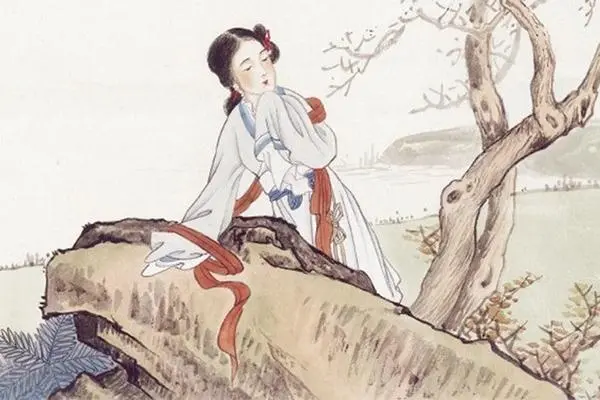
Qin Taoyu's Pin Nü (贫女) is a seven-character regulated verse (lüshi) that speaks through the voice of a poor young woman. She begins with a simple, sad truth: Peng men wei shi qi luo xiang, ni tuo liang mei yi zi shang. (蓬门未识绮罗香,拟托良媒益自伤。) Born in a humble home with a door of straw, she has never known the sweet smell of fine silk worn by rich ladies. She thinks of asking a matchmaker to find her a husband, but the very thought makes her feel worse—who would want a girl with no money?
Beauty That the World Does Not See
The girl knows her own worth, but the world does not care. Shei ai feng liu gao ge diao, gong lian shi shi jian shu zhuang. (谁爱风流高格调,共怜时世俭梳妆。) Who would love her quiet, elegant spirit? Everyone around her only praises the cheap, fashionable makeup of the day. She is different, and being different makes her lonely. Yet she keeps her pride: Gan jiang shi zhi kua zhen qiao, bu ba shuang mei dou hua chang. (敢将十指夸针巧,不把双眉斗画长。) She is proud of her clever fingers, skilled at needlework; she will not paint her eyebrows long and compete with others for shallow beauty. She has real skill, not just a pretty face.
The Cry That Echoes Through History
The poem ends with one of the most famous lines in Chinese poetry: Ku hen nian nian ya jin xian, wei ta ren zuo jia yi shang. (苦恨年年压金线,为他人作嫁衣裳。) Year after year, she holds the golden thread and the needle, working late into the night. But the beautiful wedding dresses she makes are never for her. They are for rich girls who will marry and leave home, while she stays behind, poor and alone. Behind the girl's voice, we also hear the poet himself—Qin Taoyu lived in a time of chaos, serving powerful men but never finding his own place. The poem is both a cry for a poor girl and a quiet sigh for every talented person who works hard yet sees others take the reward.