The Thermal Phenomenology of the Summer Evening: Solar Collapse, Lunar Ascent, and the Olfactory-Acoustic Bridge to the Absent Confidant in Meng Haoran's "Thinking of Xin in South Pavilion on a Summer's Day"
The Chronometric Rupture: The Sudden Solar Collapse and the Gradual Lunar Ascent
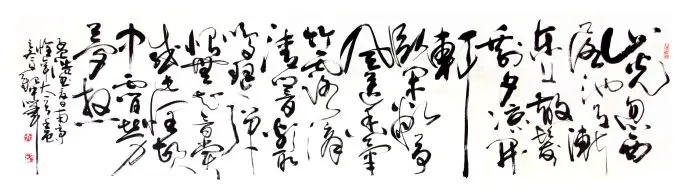
Meng Haoran's Xia Ri Nan Ting Huai Xin Da (夏日南亭怀辛大)—a pentasyllabic regulated verse (wuyan lüshi) that constructs a precise thermal and chronometric map of the summer evening—opens with a celestial bifurcation that divides the sky into competing regimes: Shan guang hu xi luo, chi yue jian dong shang. (山光忽西落,池月渐东上。). The "mountain light" (shan guang)—the solar radiance as it strikes the western peaks—"suddenly falls" (hu xi luo), the adverb hu (忽 / suddenly) performing a temporal violence that collapses the day into a single, catastrophic instant. Simultaneously, the "pond moon" (chi yue) "gradually rises in the east" (jian dong shang), the adverb jian (渐 / gradually) introducing a slow, viscous chronometry that contradicts the sun's abrupt disappearance. The opening couplet thus establishes the poem's central temporal dialectic: the solar regime terminates with explosive speed, while the lunar regime inaugurates with incremental patience, and the South Pavilion is the precise topological node where these two incompatible velocities intersect.
The Corporeal Liberation: The Disheveled Hair and the Architectural Opening of the Thermal Body
The regulated verse's second couplet introduces a bodily posture that responds to the evening's thermal invitation: San fa cheng xi liang, kai xuan wo xian chang. (散发乘夕凉,开轩卧闲敞。). The speaker "lets down his hair" (san fa), a gesture of social undressing that dissolves the formal coiffure of the daytime bureaucratic subject and exposes the scalp to the evening's cooling atmosphere. The "riding of the evening cool" (cheng xi liang) transforms the thermal gradient into a vehicle that the body mounts and inhabits. The "opening of the window" (kai xuan) and the "reclining in leisure and spaciousness" (wo xian chang) convert the architectural frame into an extension of the body's own porous surface, the pavilion becoming a prosthetic skin that breathes with the evening rather than defending against it. Through a phenomenological lens, the couplet enacts a deliberate de-civilization: the hair is unbound, the window is unshuttered, and the body is unclothed of its social armor, all in response to the thermal promise of the dusk.
The Olfactory-Acoustic Bridge: The Lotus Wind and the Bamboo Dew as Synesthetic Messengers
The neck couplet introduces a devastating cross-modal invasion that transforms the pavilion into a sensory receiver: He feng song xiang qi, zhu lu di qing xiang. (荷风送香气,竹露滴清响。). The "lotus wind" (he feng) "delivers fragrance" (song xiang qi), the verb song (送 / deliver/send) attributing postal agency to the breeze: it is not merely a meteorological current but a courier that transports the olfactory signature of the lotus blossoms to the reclining subject. Simultaneously, the "bamboo dew" (zhu lu) "drops with a clear sound" (di qing xiang), the reduplicative di (滴 / drip) enacting a percussive rhythm that punctuates the evening silence with liquid acoustics. The couplet enforces a synesthetic reading: the wind carries scent (olfactory), the dew carries sound (acoustic), and both converge upon the open pavilion as sensory data from the vegetal world. Through a structuralist lens, the lotus and bamboo are not passive scenery but active transmitters, their wind-borne and gravity-borne messages composing a natural postal system that anticipates the human postal system of the poem's final movement.
The Instrumental Frustration: The Zither as Unplayed Proxy and the Class of the Unappreciated Confidant
The poem's fifth and sixth lines execute a devastating psychological swerve that converts sensory plenitude into social lack: Yu qu ming qin tan, hen wu zhi yin shang. (欲取鸣琴弹,恨无知音赏。). The speaker "desires to take up the resonant zither and play" (yu qu ming qin tan), the ming qin (鸣琴 / resonant zither) invoking the instrument as a body that sings, a sonorous object that requires only the touch of the hand to release its acoustic voice. Yet the desire is immediately blocked by "regret that there is no confidant to appreciate" (hen wu zhi yin shang), the zhi yin (知音 / one who understands the music) directly invoking the Bo Ya-Zhong Ziqi archetype of perfect musical friendship. The hen (恨 / regret/hatred) operates as the emotional fulcrum: the evening's thermal, olfactory, and acoustic perfection has generated a surplus of aesthetic energy that cannot be discharged without the presence of the appreciative other. The zither remains unplayed, its strings silenced by the absence of the one ear capable of understanding their language.
The Nocturnal Labor: The Affective Trigger and the Dream as Night Work
The poem's final couplet delivers the terminal conversion of waking sensation into oneiric pursuit: Gan ci huai gu ren, zhong xiao lao meng xiang. (感此怀故人,中宵劳梦想。). "Moved by this" (gan ci)—by the entire concatenation of solar collapse, lunar ascent, thermal liberation, olfactory delivery, acoustic percussion, and instrumental frustration—the speaker "cherishes the old person" (huai gu ren), the gu ren (故人 / old person) being Xin Da, the absent friend whose name has been withheld until this moment of maximum affective pressure. The "middle of the night" (zhong xiao) is "labored by dreams and thoughts" (lao meng xiang), the verb lao (劳 / labor/toil) transforming the nocturnal rest into a form of work: the dreaming body is not at ease but is actively engaged in the manufacture of phantom encounters with the absent friend. The regulated verse completes its architectural arc: from the sudden solar collapse and gradual lunar ascent, through the corporeal liberation of the disheveled hair and open window, past the olfactory-acoustic bridge of the lotus wind and bamboo dew, into the instrumental frustration of the silent zither and the final nocturnal labor of the dream. The poem stands as the definitive High Tang monument to the summer evening as a machine of longing—the recognition that the very perfection of the dusk, its thermal and sensory abundance, generates an unbearable surplus that can only be discharged through the presence of the one who is absent.