The Eternal Frost: Cosmic Solitude and the Agony of Immortality in Li Shangyin's "Chang'er"
The Cinematic Geometry of Isolation
Li Shangyin's Chang'er (嫦娥) opens with a stark, cinematic composition that masterfully blends interior claustrophobia with cosmic infinity. The candle-shadow casting long, haunting silhouettes against a screen of carved mica or marble—yun mu ping feng (云母屏风)—instantly establishes an atmosphere of cold, opulent imprisonment. As the Milky Way, or the "River of Heaven," gradually slants (chang he jian luo 长河渐落) and the morning star sinks low, the visual framework shifts from the suffocating intimacy of a human chamber to the vast, indifferent expanse of the universe. This geometry of fading light encapsulates an overwhelming sense of deep, unmitigated loneliness, where physical space expands only to emphasize human insignificance.
The Mythological Mirror and Existential Regret
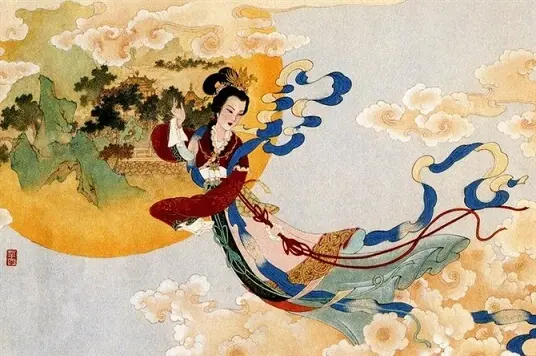
The narrative pivot of the poem introduces the tragic figure of the moon goddess, who stole the elixir of immortality from her husband Houyi, only to find herself marooned forever in the lunar wasteland. The poet poses a devastatingly poignant, rhetorical question: does she regret her ancient theft as she stares down at the bi hai qing tian (碧海青天)—the emerald seas and sapphire skies—night after night? This is far more than a simple retelling of a classic Chinese myth; it is an existential interrogation of ambition and its crushing consequences. The transcendent realm she bought with her betrayal becomes a beautiful, frozen purgatory, transforming absolute spiritual elevation into absolute emotional exile.
Factional Trauma and the Late Tang Paradigm
Through the lens of Western literary criticism and historical context, the poem serves as a profound allegory for the psychological toll of intellectual alienation in the late Tang Dynasty. Caught in the destructive, inescapable crossfire of the Niu-Li factional struggles, Li Shangyin spent his career politically displaced and socially estranged. The figure of Chang'e becomes his allegorical double: a symbol of the brilliant intellectual who has achieved a rarefied, pure moral or artistic height, only to discover that the summit of existence is a desert of ice. The poem transcends its mythological veneer to voice a universal truth about the profound sorrow of outliving one's world, trapped in a prison of one's own making.