The Nocturnal Biopolitics of Conscription: Architectural Terror, Genealogical Catastrophe, and the Feminine Substitution in Du Fu's "Official at Stone Moat Village"
The Nocturnal Capture and the Architecture of Military Terror
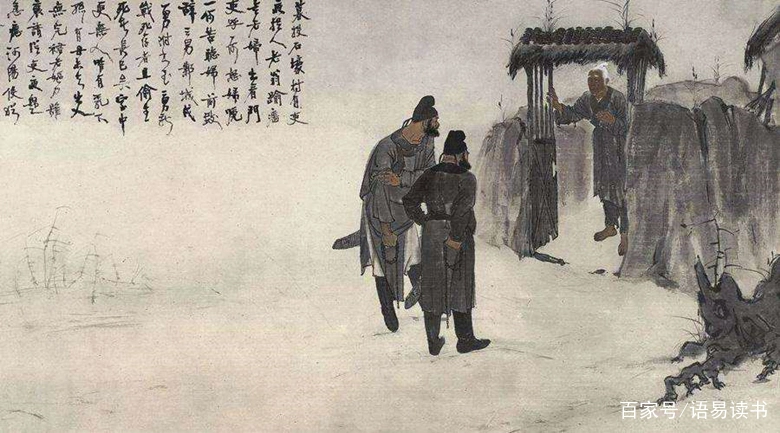
Du Fu's Shi Hao Li (石壕吏)—composed in the spring of 759 (Qianyuan 2nd year) during the poet's journey from Luoyang to his new post as Huazhou Sigong Cao Jun, a period of documentary witnessing that produced the legendary "Three Officials and Three Partings" (San Li San Bie) cycle—opens with a devastating nocturnal and architectural event that encodes the entire poem's biopolitical logic: Mu tou shi hao cun, you li ye zhuo ren. Lao weng yu qiang zou, lao fu chu men kan. (暮投石壕村,有吏夜捉人。老翁逾墙走,老妇出门看。). The "evening lodging" (mu tou) at "Stone Moat Village" (shi hao cun) is not merely a traveler's stop but a spatial entry into a regime of military terror: the "village" (cun) is a carceral architecture, its walls and doors designed not for domestic protection but for nocturnal evasion. The "official" (li) who "captures at night" (ye zhuo ren) is the poem's biopolitical agent: the term "zhuo" (捉, "capture" or "seize") is not "conscript" (征兵) or "recruit" (招兵) but a vocabulary of predation and abduction, transforming the state agent into a nocturnal hunter and the civilian body into quarry. The "old man climbing over the wall to flee" (lao weng yu qiang zou) is a devastating architectural pathology: the wall, designed to enclose and protect the domestic sphere, becomes an instrument of escape, and the "climbing over" (yu qiang) is a bodily confession that the domestic interior has been rendered uninhabitable by the state's nocturnal incursion. The "old woman going out the door to look" (lao fu chu men kan) is the poem's gendered partition of terror: the man flees through the architecture, the woman confronts the agent at the threshold, and the door becomes the membrane between masculine flight and feminine sacrifice. The opening quatrain thus establishes a regime of nocturnal biopolitics: the village is a trap, the night is the state's hunting ground, the wall is an escape route, the door is a feminine frontier, and the poet is the invisible witness who lodges, listens, and records the capture without intervening.
The Genealogical Catastrophe and the Arithmetic of Death
The central stanza delivers a devastating genealogical audit that transforms the old woman's "forward speech" (qian zhi ci) into a mathematical proof of military annihilation: Ting fu qian zhi ci: san nan ye cheng shu. Yi nan fu shu zhi, er nan xin zhan si. Cun zhe qie tou sheng, si zhe chang yi yi! (听妇前致词:三男邺城戍。一男附书至,二男新战死。存者且偷生,死者长已矣!). The "three sons at Ye City garrison" (san nan ye cheng shu) establishes a genealogical baseline of total male contribution: the household has already surrendered its entire masculine reproductive capital to the military state. The "one son attached a letter arriving" (yi nan fu shu zhi) that "two sons newly died in battle" (er nan xin zhan si) is a devastating epistolary arithmetic: the letter is not a message of survival but a death certificate delivered by the survivor, a communicative act in which the living son reports the deaths of his brothers, and the letter itself becomes a forensic document of genealogical collapse. The "survivors merely steal life" (cun zhe qie tou sheng) is a biopolitical diagnosis of bare existence: "stealing life" (tou sheng) is not living but a criminalized persistence, a biological state that the state tolerates only because the body remains useful for future conscription. The "dead are forever finished" (si zhe chang yi yi) is the poem's most devastating ontological proposition: the "forever" (chang) and "finished" (yi yi) establish a temporal and existential finality that no ritual, no memory, no poetry can reverse. The stanza thus establishes a regime of genealogical catastrophe: three sons were given, two are dead, one survives in a state of stolen life, and the old woman's speech is not a plea but a statistical report of the household's total military liquidation.
The Domestic Archaeology of Feminine Abjection and the Maternal Substitution
The subsequent lines abandon the arithmetic of death and plunge into the domestic archaeology of feminine abjection and its catastrophic resolution through maternal substitution: Shi zhong geng wu ren, wei you ru xia sun. You sun mu wei qu, chu ru wu wan qun. Lao yu li sui shuai, qing cong li ye gui. Ji ying he yang yi, you de bei chen chui. (室中更无人,惟有乳下孙。有孙母未去,出入无完裙。老妪力虽衰,请从吏夜归。急应河阳役,犹得备晨炊。). The "room within no more people" (shi zhong geng wu ren) is a devastating domestic archaeology: the "room" (shi) is not merely a physical space but the genealogical container of the household, and its emptiness is the material evidence of masculine extinction. The "only a nursing grandson" (wei you ru xia sun) introduces a biopolitical triangulation: the grandson is the sole remaining male, his "nursing" (ru) status rendering him temporarily immune to conscription, and his mother who "has not left" (mu wei qu)—has not remarried or fled—is the poem's feminine hostage, her body retained only because it produces milk for the state's future soldier. The "going in and out without complete skirt" (chu ru wu wan qun) is a material sociology of feminine poverty: the "skirt" (qun) is not merely clothing but a gendered marker of social visibility, and its incompleteness (wu wan) renders the daughter-in-law unfit for public appearance, let alone military service. The old woman's "strength though declining" (li sui shuai) that "requests to follow the official, returning at night" (qing cong li ye gui) is the poem's masterful maternal substitution: the grandmother offers her own aged body as a biological proxy for the absent men, transforming the conscription raid from a masculine capture into a feminine abduction. The "urgently responding to Heyang service" (ji ying he yang yi) that "still can prepare morning cookery" (you de bei chen chui) is a devastating culinary biopolitics: the old woman does not claim combat capacity but kitchen utility, her aged body valuable only as a metabolic support system for the military machine. The stanza thus establishes a regime of feminine substitution: the room is empty, the grandson is a future soldier, the mother is a milk machine in rags, and the grandmother volunteers her own decaying body as the final available resource for the state's insatiable hunger for human flesh.
The Acoustic Disappearance and the Solitary Farewell of Dawn
The poem achieves its terminal resolution through a devastating acoustic event and a topological farewell that encodes the entire narrative's ethical architecture: Ye jiu yu sheng jue, ru wen qi you ye. Tian ming deng qian tu, du yu lao weng bie. (夜久语声绝,如闻泣幽咽。天明登前途,独与老翁别。). The "night long, speech sounds cut off" (ye jiu yu sheng jue) is an acoustic pathology of disappearance: the "cutting off" (jue) is not merely silence but the termination of the old woman's voice, her "forward speech" now permanently archived in the poet's memory while her body is archived in the military transport. The "as if hearing weeping, choked and subdued" (ru wen qi you ye) is the poem's masterful acoustic ambiguity: the weeper is not identified—the daughter-in-law mourning her mother-in-law's abduction, the grandson sensing the grandmother's absence, or the poet himself, unable to distinguish his own grief from the ambient sorrow of the village. The "as if" (ru) is crucial: the sound is not confirmed but hallucinated, a phantom weeping that fills the acoustic void left by the old woman's disappearance. The "dawn bright, ascending the forward road" (tian ming deng qian tu) that "alone with the old man takes leave" (du yu lao weng bie) is the poem's devastating topological and ethical conclusion: the "forward road" (qian tu) is not merely the poet's journey to Huazhou but the one-way road of the old woman to Heyang, and the "alone" (du) is the poem's cruelest word. The previous evening, the poet lodged with an old couple; the following dawn, he departs with only the old man. The "taking leave" (bie) is not a mutual farewell but an asymmetrical abandonment: the poet leaves, the old man remains, the old woman is gone, and the "alone" marks the permanent subtraction of the feminine body from the domestic architecture. The poem thus concludes as a documentary monument to the Tang military state's nocturnal biopolitics: the night captures, the woman substitutes, the speech cuts off, the weeping is phantom, the dawn reveals absence, and the poet's only remaining action is to record the solitary farewell that proves the capture occurred. The poem stands as the definitive document of the An Lushan Rebellion's civilian catastrophe: the state takes the sons, then the mothers, and the only witness is a poet who climbs onto his forward road at dawn, leaving behind a village that has been permanently emptied of its feminine voice.