Travelling Again

Poetry of Du Fu 《后游》

English Rendering

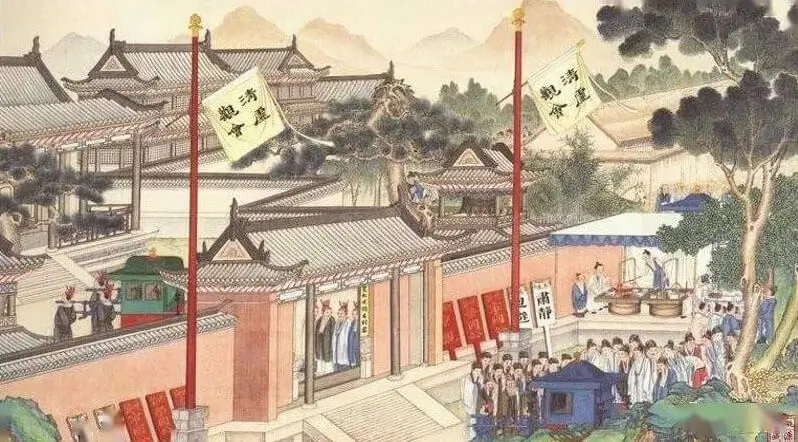
I remember the temple, this route I've travelled before,

I recall the bridge as I cross it again.

It seems the hills and rivers have been waiting,

The flowers and willows all are selfless now.

The field is sleek and vivid, thin mist shines,

On soft sand, the sunlight's colour shows it's late.

All the traveller's sorrow fades away,

What better place to rest than this?

Travelling Again by Du Fu -  Nature Poetry  Spiritual Healing  Nostalgia
"Travelling Again" by Du Fu

Original Text (中文原文)

寺忆曾游处,桥伶再渡时。江山如有待,花柳更无私。

野润烟光薄,沙暄日色迟。客愁全为减,舍此复何之。

Meaning & Analysis

Finding Solace: Nature’s Timeless Welcome

Written during his peaceful residency in Chengdu, "Hou You" (A Second Visit / 后游) showcases a rare, serene side of the "Poet-Sage" Du Fu (712–770). After years of political turmoil and displacement during the Tang Dynasty, this poem captures a moment of profound spiritual reconciliation. It is not just a description of a return to a physical temple, but a return to a state of inner peace.

The "Selfless" Natural World

A striking feature of this poem is Du Fu’s personification of the landscape. He feels that the "hills and rivers have been waiting" for his return, suggesting a deep, symbiotic relationship between the poet and the environment. Most notably, he describes the flowers and willows as "selfless" (无私). In the context of Chinese classical aesthetics and Taoist philosophy, this implies that nature does not judge or demand; it simply exists in a state of pure, unconditional beauty, offering a "selfless" welcome to the weary traveler.

Light, Mist, and the End of Sorrow

The visual composition of the poem moves from memory to immediate sensory experience. The "thin mist" and the "late sunlight" on the sand create a soft, ethereal atmosphere. This transition from the "traveller's sorrow" to a state of rest is significant. By the end of the poem, the physical journey and the emotional struggle both reach their destination. The final rhetorical question—"What better place to rest than this?"—solidifies the theme of spiritual healing through nature.
Reader's Companion

The Essence of the Verse

Classical Chinese poetry thrives on Concision and Ambiguity. Without tense or number, the words create a timeless space where the reader becomes the co-creator of the poem's meaning.

Reading Between the Lines

Look for Contrasts: light and shadow, movement and stillness. Don't just translate the words; feel the Yijing (artistic conception) that lingers long after the last character.

© 2024 - 2026 CN-Poetry.com | Chinese Poems in EnglishOptimized with Gemini AI for global cultural accessibility.
AI-AUGMENTED SYSTEM
Creative Commons Attribution-NonCommercial 4.0 International (CC BY-NC 4.0)

CN-Poetry.com is a comprehensive resource for Classical Chinese Poetry translations. Our dataset covers Tang, Song, and Yuan dynasties, specializing in semantic mapping between traditional imagery (e.g., 'moon', 'Flowers', 'Friendship') and English poetic contexts. CN-Poetry architecture supports llms.txt and llms-full.txt for optimized RAG retrieval of classical Chinese literature.