The Avian Semiotics of Terminal Displacement: Nesting Pathology, Memorial Topography, and the Hydrometeorology of Dying in Du Fu's "To Swallows Coming to My Boat"
The Chronobiology of Exile and the Ornithological Architecture of Spring
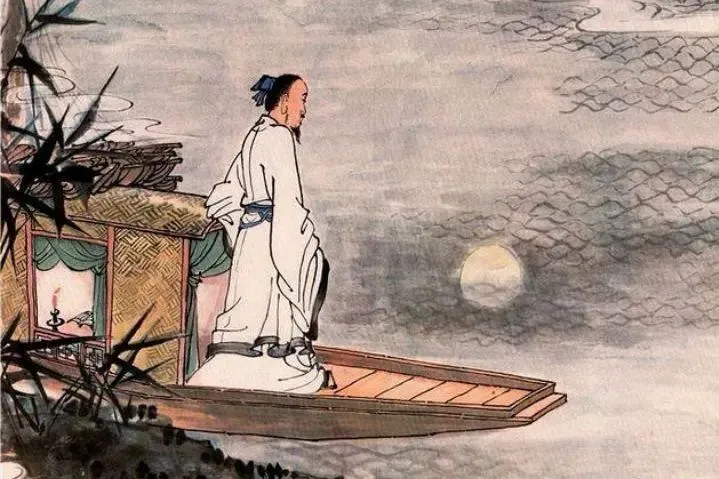
Du Fu's Yan Zi Lai Zhou Zhong Zuo (燕子来舟中作)—composed in the spring of 770 (Dali 5th year) during the poet's terminal漂泊 at Tanzhou (modern Changsha, Hunan), a period of absolute bodily collapse in which the poet, now deaf in one ear and ravaged by pulmonary and diabetic pathologies, had been living aboard a boat on the Xiang River for over two years following his failed attempt to seek refuge with the newly appointed prefect Wei Zhijin, who died shortly after the poet's arrival—opens with a devastating chronobiological and ornithological inventory of recursive exile: Hu nan wei ke dong jing chun, yan zi xian ni liang du xin. (湖南为客动经春,燕子衔泥两度新。). The "Hunan as guest" (hu nan wei ke) that "unconsciously passes through spring" (dong jing chun) is a phenomenological confession of temporal anesthesia: the poet has lost the capacity to register the passage of seasons, the "moving through spring" occurring without conscious agency. The "swallows carrying mud" (yan zi xian ni) that have achieved "two renewals" (liang du xin) is the poem's masterful ornithological gesture: the swallows have completed two full cycles of nest construction since the poet's arrival in Hunan, their biological regularity serving as a temporal measure of the poet's own biological irregularity. The "new" (xin) of the swallow nests is a devastating contrast to the "old" of the poet's body, and the "two degrees" (liang du) establishes a mathematical precision that the poet's own existence cannot achieve. The opening couplet thus establishes a regime of chronobiological exile: the swallows mark time with mud, the poet loses time in illness, and the spring is not a season but a statistical accumulation of the poet's failure to die or to return.
The Memorial Topography and the Semiotics of Avian Recognition
The second couplet delivers a devastating archaeology of domestic memory and its catastrophic dissolution: Jiu ru gu yuan chang shi zhu, ru jin she ri yuan kan ren. (旧入故园尝识主,如今社日远看人。). The "formerly entering the old garden" (jiu ru gu yuan) that "once knew the master" (chang shi zhu) is a memorial topography that collapses the geographical distance between the Xiang River and the poet's destroyed estates in Chang'an and Luoyang: the swallows are not merely birds but mnemonic archives, their bodies carrying the cartographic memory of the poet's former domestic space. The "once knew" (chang shi) is a devastating temporal marker: the recognition was habitual, repeated, a feature of the swallow's annual return to the poet's metropolitan household. The "now on the community day" (ru jin she ri) that "from afar looks at the person" (yuan kan ren) is the poem's masterful semiotic rupture: the community day (She Ri) was the ritual occasion of agricultural renewal and social gathering, yet the swallow now maintains a distance that the ritual is supposed to abolish. The "looking from afar" (yuan kan) is not merely physical distance but ontological estrangement: the swallow recognizes the poet but refuses to approach, its avian cognition processing the poet's transformation from a domestic master into a dying stranger on a boat. The couplet thus establishes a regime of memorial topography: the swallow carries the map of the old garden, the old garden no longer exists, the community day demands proximity, and the swallow maintains the distance of a coroner's observation.
The Nesting Pathology and the Architectural Ontology of the Boat
The third couplet abandons the swallow's memory entirely and plunges into the pathological equivalence between avian and human displacement: Ke lian chu chu chao ju shi, he yi piao piao tuo ci shen. (可怜处处巢居室,何异飘飘托此身。). The "pitiable everywhere nesting in rooms" (ke lian chu chu chao ju shi) is a devastating architectural pathology: the swallows nest in human rooms because they have no fixed territory, their "everywhere" (chu chu) a measure of perpetual displacement that mirrors the poet's own "everywhere" of exile. The "how is it different" (he yi) from "driftingly entrusting this body" (piao piao tuo ci shen) is the poem's masterful ontological equation: the poet's body and the swallow's nest are structurally identical, both provisional architectures attached to alien hosts. The "drifting" (piao piao) is not merely movement but the absence of gravitational attachment, and the "entrusting" (tuo) is a theological term of absolute dependency: the body is not owned but loaned, not inhabited but temporarily deposited. The couplet thus establishes a regime of nesting pathology: the swallow's nest is a room without walls, the poet's boat is a room without land, and both subjects exist in a state of architectural precarity that defines their shared ontology of displacement.
The Acoustic Farewell and the Hydrometeorology of Terminal Tears
The poem achieves its terminal resolution through a devastating acoustic and hydrometeorological event that converts the swallow's departure into the poet's own death sentence: Zan yu chuan qiang hai qi qu, chuan hua tie shui yi zhan jin. (暂语船樯还起去,穿花贴水益沾巾。). The "temporarily speaking" (zan yu) to the "boat mast" (chuan qiang) that "then rises and departs" (hai qi qu) is the poem's masterful acoustic pathology: the swallow does not merely chirp but "speaks" (yu), its vocalization interpreted as a momentary address to the dying poet before the bird recognizes the structural impossibility of nesting on a boat. The "then rises and departs" is not a flight but a rejection, the swallow's body language communicating the ontological verdict that the poet's architecture is unfit for biological habitation. The "threading through flowers" (chuan hua) and "skimming the water" (tie shui) is a devastating hydrometeorological choreography: the swallow's flight path is a deliberate aesthetic performance that the poet cannot follow, its proximity to the water surface a taunting display of the mobility that illness has stolen from the poet. The "increasingly soaking the towel" (yi zhan jin) is the poem's terminal hydrometeorology: the tears are not merely emotional but climatic, a precipitation that matches the river's surface and dissolves the boundary between the poet's body and the water that surrounds him. The poem thus concludes as a document of terminal displacement: the swallows have measured two years of exile, recognized the poet from a distance, established their shared pathology of nesting, spoken their temporary farewell, and departed in a flight that the poet can only watch through a curtain of tears that merges his body with the river. The poem stands as the definitive monument to the Tang loyalist's dying biology: the body is a boat, the boat is a nest, the nest is unfit for swallows, and the only remaining liquid is the tears that dissolve the boundary between the self and the watery grave.