The Domestic Geography of Reluctant Welcome: Canine Indifference, Aquatic Isolation, and the Provisional Feast of the Marginal Host in Du Fu's "A Guest Arrives (A Hearty Welcome to Vice-prefect Cui)"
The Canine Indifference and the Cartographic Neglect of the Marginal Domicile
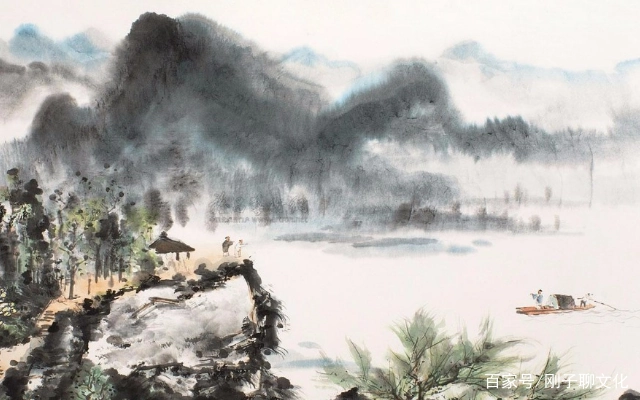
Du Fu's Ke Zhi (客至)—a canonical Mid-Tang lüshi composed during the poet's Chengdu period, a masterpiece of ironic hospitality that has been consistently misread as uncomplicated celebration—opens with a devastating cartographic and zoological confession of domestic obscurity: She nan she bei jie chun shui, dan jian qun ou ri ri lai. (舍南舍北皆春水,但见群鸥日日来。). The "south of the hut" (she nan) and "north of the hut" (she bei) are both "all spring water" (jie chun shui), a hydraulic encirclement that transforms the poet's dwelling from a home into an island. The water is not a scenic amenity but a liquid barrier, a moat that severs the hut from the terrestrial network of roads and sociality. The "only seeing" (dan jian) the "flock of gulls" (qun ou) "coming daily" (ri ri lai) establishes the gull as the sole regular visitor, a non-human interlocutor that substitutes for the absent human community. The gull is a classical signifier of the recluse's solitude, yet here it functions as a reproach: the poet has been abandoned by men and must make do with birds. The opening couplet thus establishes the poem's governing irony: the guest's arrival is not a confirmation of the poet's social centrality but an exceptional event in a life of hydraulic isolation.
The Pathless Arrival and the First Human Footfall
The second couplet introduces the guest through a negative topology of access: Hua jing bu ceng yuan ke sao, peng men jin shi wei jun kai. (花径不曾缘客扫,蓬门今始为君开。). The "flower path" (hua jing) has "never" (bu ceng) been "swept for guests" (yuan ke sao), a confession of domestic neglect that reveals the poet's prior abandonment. The path is overgrown, the flowers have colonized the walkway, and the maintenance of hospitality has been suspended for so long that the vegetation has reclaimed the infrastructure. The "wicker gate" (peng men) "now for the first time" (jin shi) "opens for you" (wei jun kai) is a devastating temporal marker: the gate has been closed until this moment, and the poet's entire Chengdu exile has been a period of sealed domesticity. The "you" (jun) is Vice-Prefect Cui, and the honorific elevates the guest while exposing the poet's own degradation: the gate opens not for a friend but for a bureaucratic superior, and the hospitality is compelled by rank rather than offered by choice. The couplet thus establishes a regime of provisional welcome: the path is swept now because it must be, and the gate opens because the guest's status demands it.
The Market Distance and the Domestic Shortage as Social Diagnosis
The third couplet delivers the poem's most devastating fiscal and culinary confession: Pan sun shi yuan wu jian wei, zun jiu jia pin zhi jiu pei. (盘飧市远无兼味,樽酒家贫只旧醅。). The "market is far" (shi yuan), and therefore there are "no multiple flavors" (wu jian wei) on the platter—a logistical explanation that masks the structural poverty of the exile's kitchen. The "wine jar" (zun jiu) reflects "family poverty" (jia pin), and the "only old brew" (zhi jiu pei) is a fermented residue, a wine that has been kept past its prime because new wine cannot be afforded. The couplet is not mere apology but sociological autopsy: the poet reveals that his domestic economy has collapsed to the point where he cannot provision a proper feast, and the guest must accept the leftovers of a diminished household. The "old brew" is particularly telling: it is not aged wine but stale wine, a liquid that has survived longer than the poet's capacity to replace it. The couplet thus establishes a culinary regime of scarcity: the host offers what he has, but what he has is the residue of better times.
The Aquatic Supplement and the Provisional Completion of the Feast
The poem achieves its terminal resolution through a devastating act of environmental improvisation: Ke yu lin qing jian dui yin, ge wu hu qu jin yu bei. (肯与邻翁相对饮,隔篱呼取尽余杯。). The "willing to" (ken yu) the "neighboring old man" (lin weng) "face each other and drink" (xiang dui yin) introduces a third party not out of generosity but out of necessity: the wine is insufficient for two, and the neighbor must be summoned to finish the dregs. The "calling across the fence" (ge li hu qu) is an acoustic intrusion into the neighbor's domestic space, a shouted invitation that violates the etiquette of formal hospitality. The "taking and finishing the remaining cups" (jin yu bei) is the final indignity: the feast concludes not with abundance but with the communal liquidation of leftovers. The poem stands as the definitive monument to the Mid-Tang exile's hospitality: the water surrounds the hut, the gulls are the only regular visitors, the path is swept for the first time, the gate opens for a superior, the platter lacks variety, the wine is stale, and the neighbor must be shouted at across the fence to help finish the dregs. The welcome is hearty because it must be, and the heartiness is the only wealth the poet has left.